Mara Werner · 28 September 2026
Mapping the Journey of Herbal Compounds from Farm to Formulation in Health Supplements
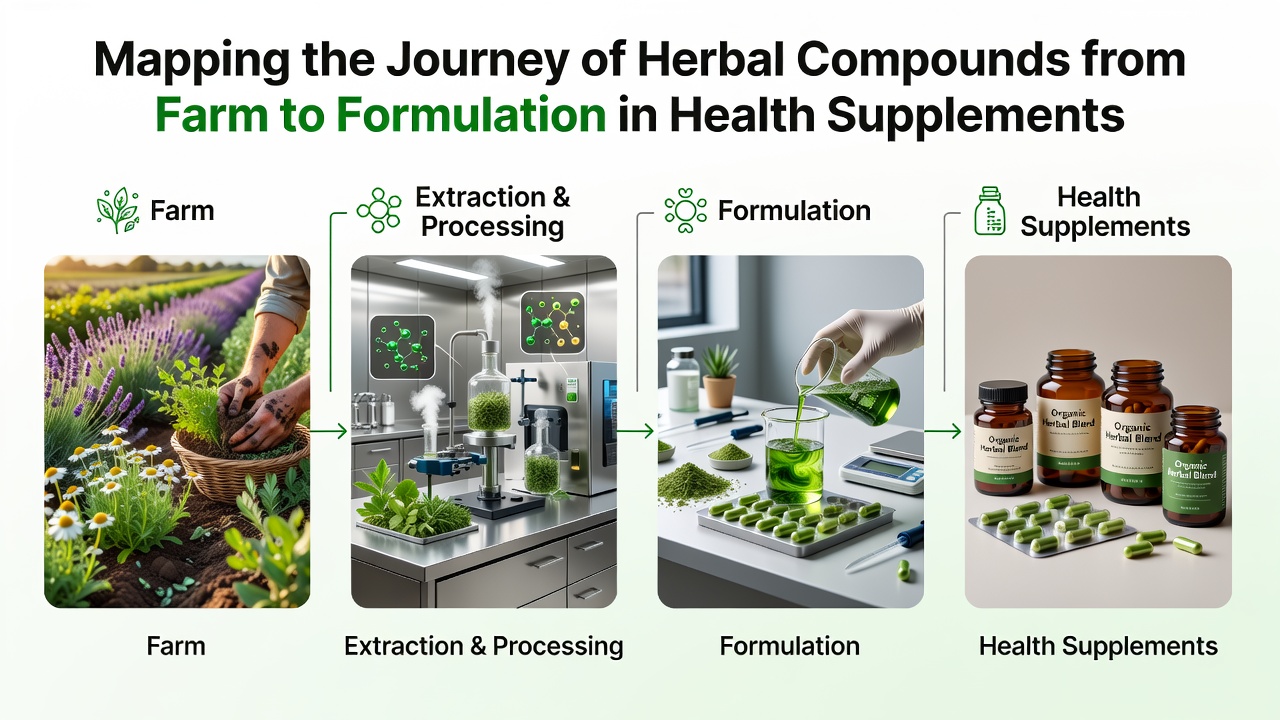
The journey of herbal compounds begins in agricultural settings where specific plant species grow under controlled conditions that influence their chemical profiles, and farmers select varieties based on documented active ingredient concentrations while managing soil composition, irrigation schedules, and sunlight exposure to optimize yields. Data from agricultural reports show that regions such as the Mediterranean and parts of Southeast Asia produce high volumes of herbs like turmeric and ashwagandha because their climates align with the plants' native requirements, which in turn affects the consistency of bioactive markers once the materials reach processing facilities.
Cultivation Practices and Environmental Factors
Soil testing precedes planting in many commercial operations because nutrient levels directly correlate with the presence of compounds such as curcuminoids and withanolides, while crop rotation cycles reduce pest pressure without heavy reliance on synthetic inputs. Observers note that organic certification programs, which expanded in several countries during the past decade, require traceability records from seed sourcing through harvest, and these records later support regulatory submissions for finished supplements. Studies on climate variables indicate that temperature fluctuations during the growing season can alter essential oil content in plants like peppermint and lavender, prompting growers to adjust planting dates accordingly.
Harvesting, Drying, and Initial Handling
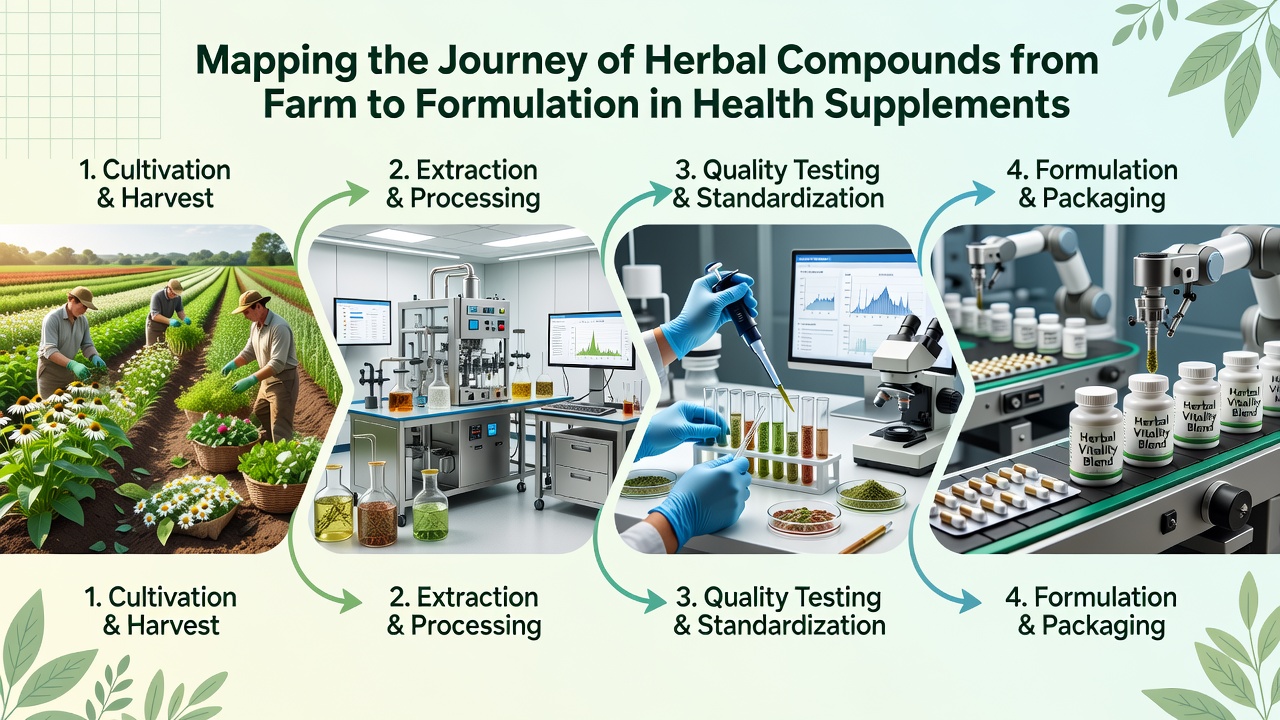
Timing of harvest aligns with peak concentration of target compounds, and workers collect leaves, roots, or flowers at specific growth stages documented in botanical guidelines. Fresh material moves quickly to drying areas where controlled airflow and temperature prevent degradation of heat-sensitive molecules, and moisture content drops to levels that inhibit microbial growth during storage. Equipment calibration ensures uniform drying across batches, and operators log environmental data for each lot so downstream processors can verify starting material quality.
Extraction Techniques in Processing Facilities
Once dried, plant material enters extraction lines where solvents or mechanical methods isolate desired compounds, and technicians adjust parameters such as solvent polarity, temperature, and duration to maximize recovery while minimizing unwanted co-extracts. Supercritical carbon dioxide systems operate under high pressure to pull non-polar constituents from herbs like ginger without leaving residual solvents, whereas water-based extractions suit polar molecules found in green tea leaves. Equipment maintenance logs and batch records track each step, creating an auditable trail that regulators and manufacturers review during quality audits.
Quality Testing and Standardization Steps
Laboratories perform identity verification using techniques such as high-performance liquid chromatography and mass spectrometry to confirm the presence and quantity of marker compounds, and these tests occur at multiple points from raw herb receipt through final extract. Microbial limits, heavy metal thresholds, and pesticide residue screens follow protocols established by international pharmacopeias, and any lot failing specifications undergoes quarantine or rejection. Data compiled by testing facilities show that consistent application of these assays reduces variability in finished products and supports label claims regarding ingredient potency.
Formulation, Encapsulation, and Final Assembly
Concentrated extracts combine with excipients such as fillers, binders, and stabilizers during formulation, and formulators calculate ratios to achieve uniform distribution of active ingredients across each dose. Capsule filling machines or tablet presses then shape the blends into consumer-ready formats while automated weight checks maintain dosage accuracy. Stability studies conducted under accelerated conditions predict shelf life, and manufacturers select packaging materials that limit exposure to light, oxygen, and moisture that could degrade sensitive compounds over time.
Regulatory Frameworks Across Regions
Agencies including the U.S. Food and Drug Administration oversee labeling and safety requirements for dietary supplements sold in that market, whereas the European Food Safety Authority evaluates health claims before they appear on products distributed across member states. In Australia the Therapeutic Goods Administration maintains a register of listed medicines that includes many herbal preparations, and compliance documentation from farm through formulation supports these registrations. Updates scheduled for September 2026 in several jurisdictions will introduce revised contaminant limits for certain botanical ingredients, prompting manufacturers to review sourcing and testing protocols ahead of the effective date.
Traceability Systems and Supply Chain Documentation
Digital platforms now record lot numbers, test results, and handling dates at each transfer point, enabling rapid identification of any material that requires recall. Blockchain pilots in parts of the supply chain provide immutable records that auditors and retailers can access, while paper-based systems still operate in smaller operations where digital infrastructure remains limited. These documentation layers connect the initial farm location to the final packaged bottle and allow retailers to answer consumer inquiries about ingredient origins.
Conclusion
The complete pathway from cultivation fields to encapsulated supplements involves coordinated steps in agriculture, extraction chemistry, analytical testing, and regulatory compliance, with each stage generating data that supports product consistency. Ongoing refinements in testing methods and traceability tools continue to shape how manufacturers verify the journey of herbal compounds, and stakeholders across the sector monitor upcoming regulatory changes to maintain alignment with evolving standards.